
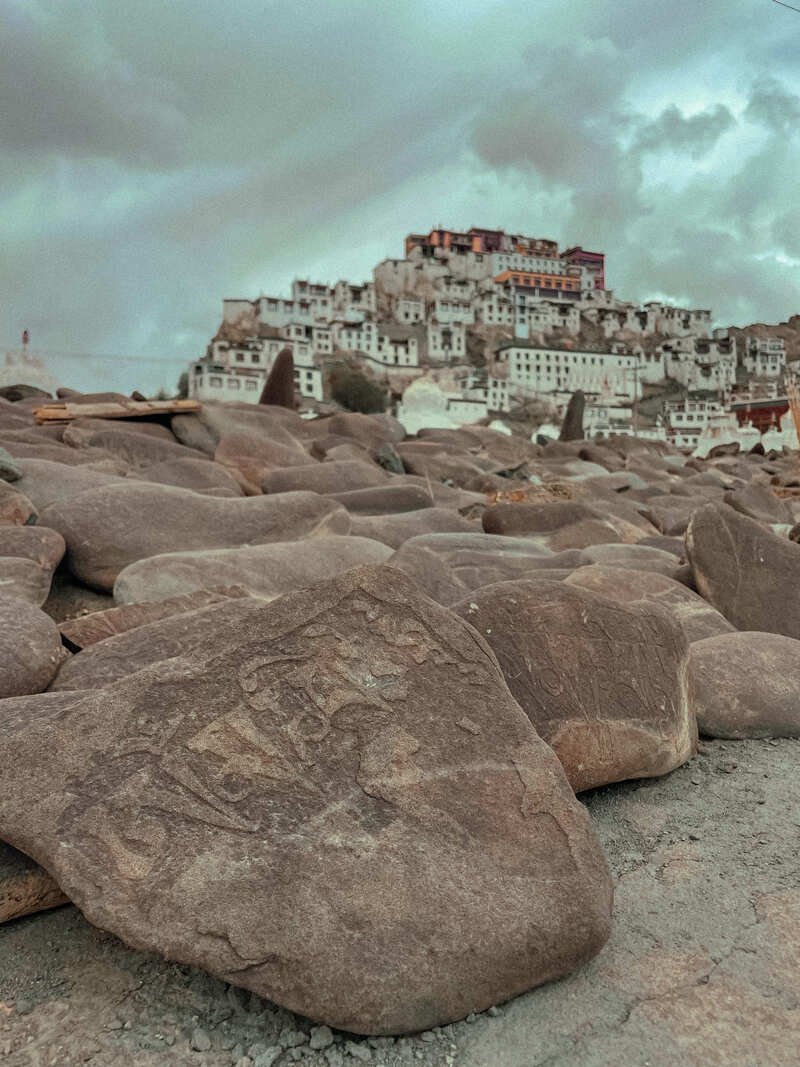
It might be an understatement to say there’s no better place than Ladakh for monastery-hopping. When you’re driving through the rugged Himalayan terrain of Ladakh, you’ll realise that Ladakh monasteries feel less like tourist attractions and more like worlds of their own. You’ll find these ancient monasteries perched on cliffs, hidden in valleys or overlooking deserts and having a distinct spiritual energy of their own.
Thiksey Monastery is known for its striking Tibetan-style architecture and giant Buddha statue, while Lamayuru Monastery looks straight out of another planet, surrounded by Ladakh’s famous Moonland terrain. Hemis Monastery is Ladakh’s grandest, known for its spectacular cham dances and rich Buddhist heritage. Then there’s Alchi Monastery, which is quieter but home to some of the Himalayas’ oldest Buddhist art.
When you hear the peaceful chants at dawn and see prayer wheels spinning endlessly you realise that Ladakh monasteries carry its spiritual heartbeat. Whether you’re drawn to the smell of butter lamps, the rituals or the calmness that these centuries old spaces hold, you’ll feel more alive than before during your trip to Ladakh.
- Hemis Monastery – The Largest Monastery in Ladakh
At a distance of 45 km from Leh, you can find the largest and most famous monastery in Ladakh which belongs to the Drukpa lineage of Tibetan Buddhism. One of the top reasons why you should visit Hemis Monastery is the annual Hemis Festival to celebrate the birth anniversary of Guru Padmasambhava with energetic music performances and masked dances. When you are inside the monastery, you can see beautiful Buddhist paintings, the statue of Guru Padmasambhava and explore its museum, which exhibits many old thangkas, Tibetan ritual objects, and ceremonial weapons.
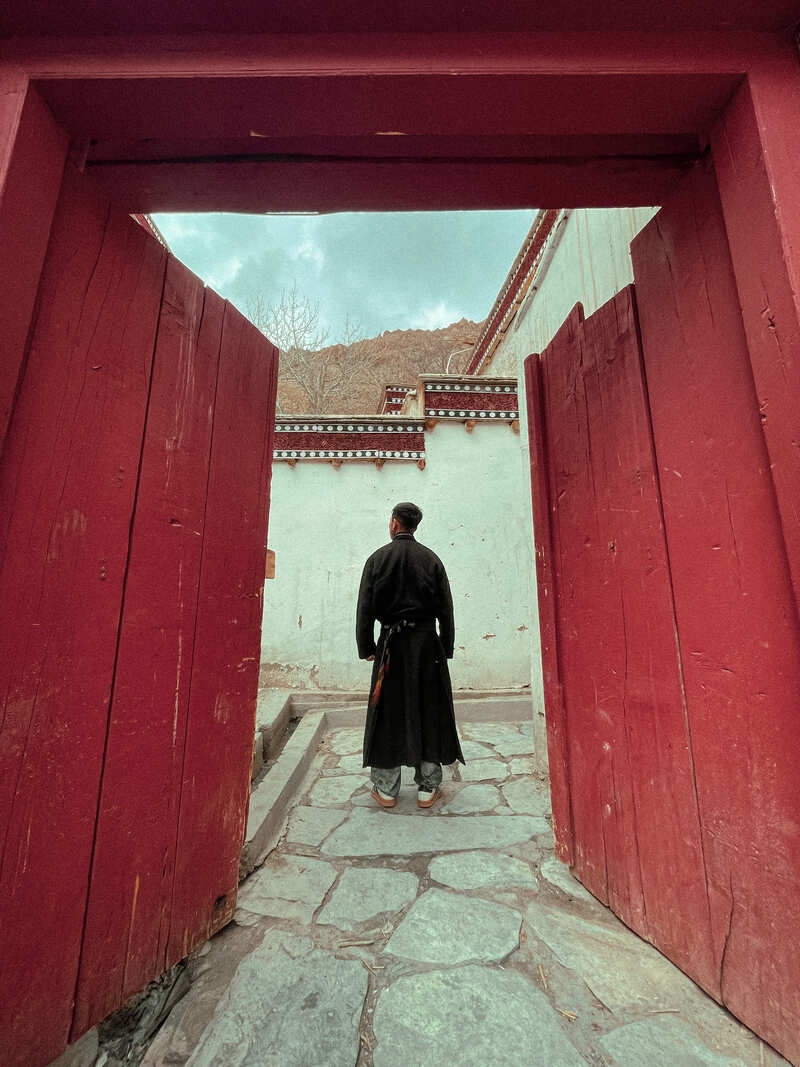
- Thiksey Monastery – The Mini Potala Palace
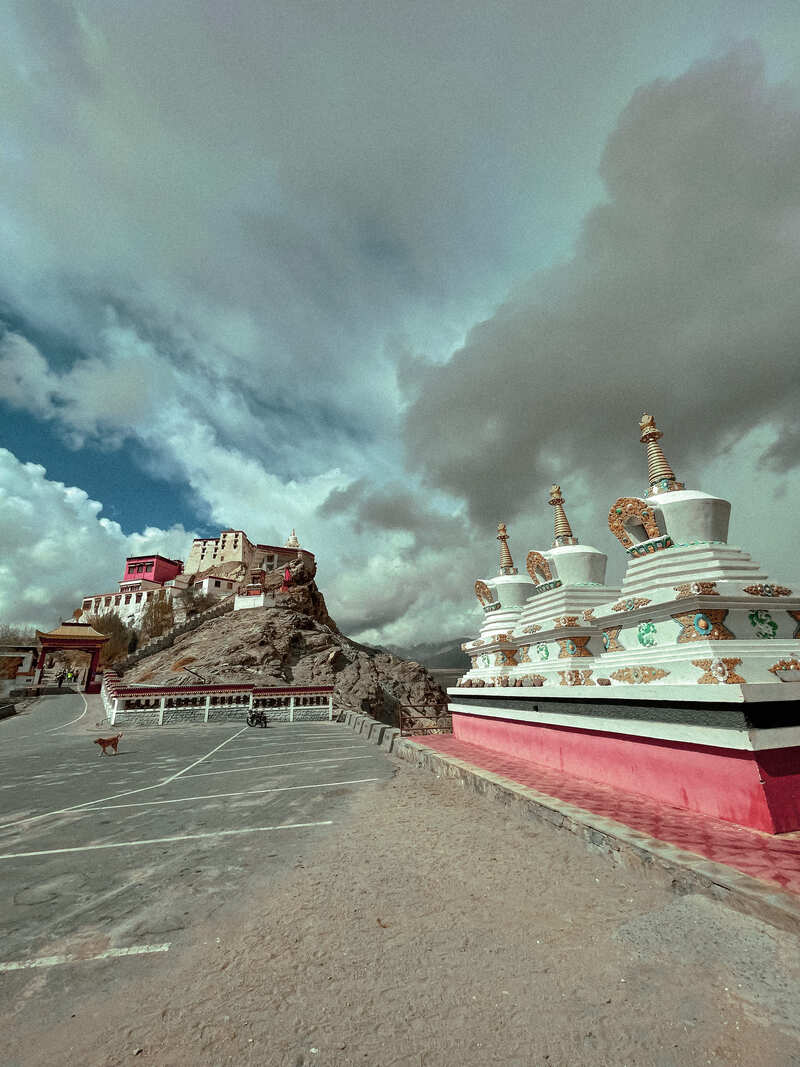
You might visit Thiksey Monastery to see the giant Maitreya Buddha statue or explore the beautiful murals, scriptures, and statues of Buddhist deities. But when you come here, it’s layered hilltop architecture and views of the Indus Valley leave you speechless. You’ll see that the monastery is built in ascending order on a steep hill, which makes it lookalike to Tibet’s Potala Palace. If your itinerary allows you, plan your visit during early morning to catch a beautiful sunrise and attend the prayers with traditional Tibetan instruments, deep rhythmic chants by the monks and enjoy a cup of warm butter tea.
- Diskit Monastery – Jewel of Nubra Valley
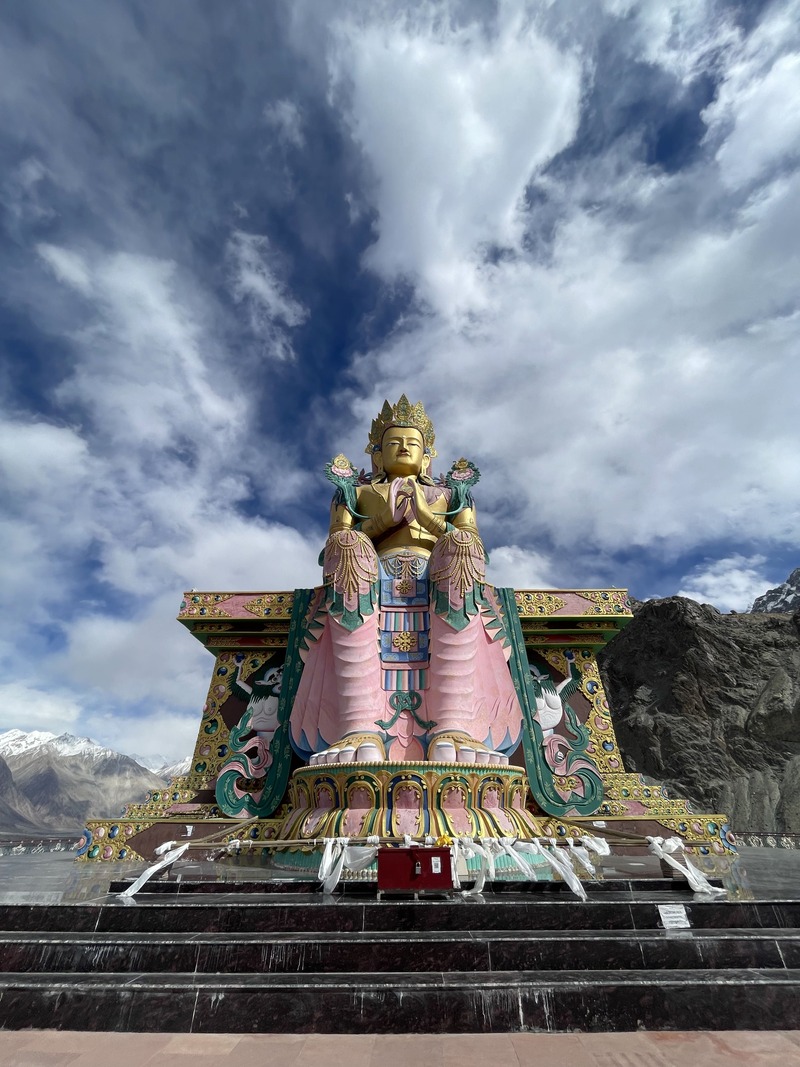
Imagine spell-binding views of Nubra Valley’s sand dunes, Shyok River, and snow-covered peaks from one of the oldest and top monasteries in Ladakh. At Diskit Monastery, you can also see the 106-foot Maitreya Buddha statue with colorful prayer flags fluttering as far as your vision goes. This 14-th century monastery belongs to the Gelug sect of Tibetan Buddhism and invites you for an unforgettable spiritual escape. If you wish to get a deeper glimpse into the region’s culture, plan your visit around the annual Dosmoche Festival to see rituals and ceremonies that are believed to ward off negativity and bring prosperity to your life.
- Alchi Monastery – A Hidden Artistic Treasure
Add a visit to Alchi Monastery to your itinerary if you wish to see rare Kashmiri influenced murals and woodwork and rare Buddhist art of Buddhist deities, mandalas and other celestial figures. Inside the monastery, you really don’t need a plan. You can wander among temples like Sumtsek Temple and the Temple of Manjushri or see clay statues of Bodhisattvas, especially Avalokiteshvara. It is among the old monasteries in Ladakh to experience a museum-like, calm and contemplative atmosphere, with dimly lit interiors that transports you into another era.
- Lamayuru Monastery – The Moonland Monastery
If you visit Lamayuru Monastery and happen to interact with locals, they’ll tell you the legend of how it was once a lake that dried up after a Buddhist scholar meditated here and gave rise to the monastery. When you see how the monastery appears almost carved into the rugged mountains, you might be even compelled to believe it. Nevertheless, it is among the most famous monasteries of Ladakh to see the sweeping views of Himalayas and know more about ancient thangkas, statues and sacred scriptures. You can also plan a visit during Yuru Kabgyat Festival to see one of the most vibrant cultural gatherings in Ladakh.
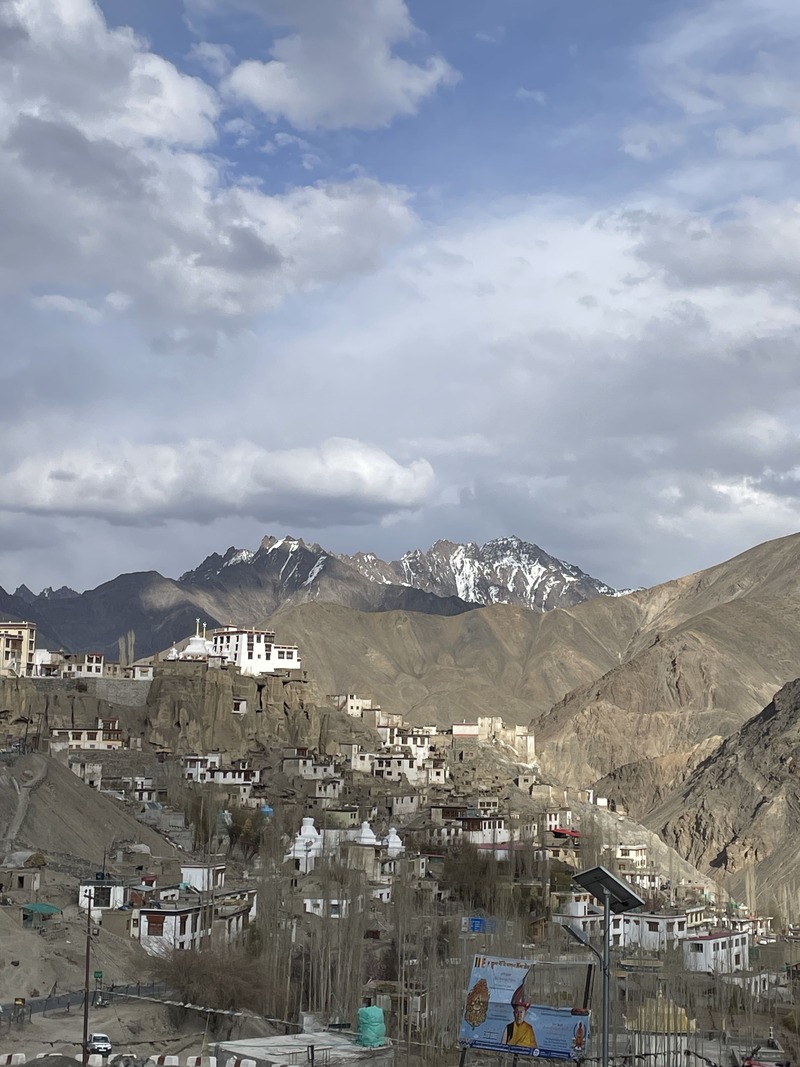
- Spituk Monastery – A Scenic Escape Near Leh
If you’re wondering how to maximise a day-trip from Leh, Spituk Monastery is just a short drive away where you can enjoy peace and quiet away from the bustle of town. This monastery was founded in the 11th century and offers you a rare glimpse of ceremonial costumes, Buddhist statues and ancient masks. You need to take a small hike to reach the monastery at the hilltop to be rewarded by incredible views of the Indus Valley stretching across the rugged Ladakhi landscape, with Leh visible in the distance.
Best Time to Visit Ladakh Monasteries
You can book a Ladakh trip from Hyderabad, Mumbai, Delhi or anywhere in India between May and September as it is the best time to explore Ladakh’s monasteries. During this time, you can enjoy pleasant weather and access open roads. The monasteries like Hemis, Diskit and Thiksey are easily accessible with stunning mountain views and ideal photography conditions as your surprise reward.
If you are interested in Ladakh’s cultural side, visiting during Ladakh’s monastery festivals is especially rewarding. Festivals like the Hemis Tsechu at Hemis Monastery or the Gustor Festival at Thiksey and Spituk Monastery bring monasteries alive with masked cham dances, traditional music and vibrant rituals.
Tips for Visiting Ladakh Monasteries
- Before you go monastery hopping in Leh, you should consider spending at least 24-48 hours resting and acclimatising yourself to avoid altitude sickness.
- If you are visiting famous monasteries in Ladakh like Thiksey Monastery and Hemis Monastery, you should go early as morning prayers begin between 6 AM and 8 AM.
- You’ll realize that temperatures inside monasteries remain cool even in summer. If your baggage allows, carry a light jacket and avoid revealing clothing entering sacred areas inside Ladakh monasteries.
- You can try your hands at outdoor photography, as it is generally allowed, but flash photography inside monasteries like Alchi Monastery is often prohibited because ancient murals and pigments are sensitive to light damage. Check signboards or ask monks before you start photographing the interiors.
- Keep some spare cash as some Ladakh monasteries may ask for entry fees. Also since network connectivity is patchy, you cannot really depend entirely on digital payments.
- While visiting famous monasteries in Ladakh, maintain decorum and follow basic etiquettes like walking clockwise around stupas and prayer wheels, avoid touching murals or scriptures and avoid sitting on platforms reserved for monks.
- Many Ladakh monasteries involve stairways and uneven paths. Carry comfortable walking shoes, sunglasses and water if you are going during afternoon heat.
Whether it’s the feeling of sitting quietly inside a dim prayer hall while chants echo in the background or sharing butter tea with monks after morning prayers at Thiksey Monastery, these monasteries leave you with an unforgettable impression. You may come to experience a slice of history or culture while visiting Ladakh monasteries and mountains, but once you are inside the monasteries, it feels like another journey that goes beyond casual sightseeing.